
Shopping Cart
There are no more items in your cart



















































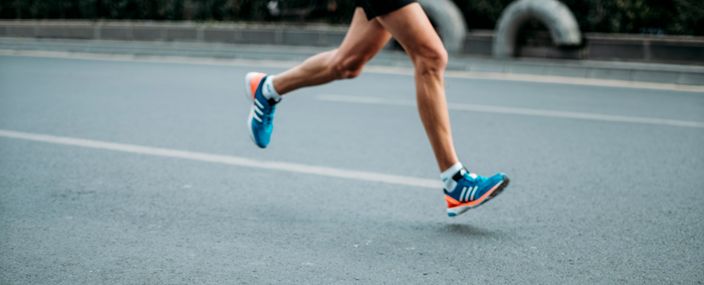
Half marathon running shoes
21,097 metres. Not a distance to improvise. The shoes you wear make the difference between crossing the finish line strong or limping through the last five kilometres. This is Aristarun's technical selection to help you get there strong.
+50
Models in catalogue
15 brands
Asics, Nike, Hoka, Brooks…
600–800 km
Average shoe lifespan
24/48 h
Delivery in mainland Spain
Not just a long distance.
The half marathon is the crown event for the everyday runner. Demanding enough that your shoes matter, accessible enough that anyone with a sensible training plan can finish it. And that's the trap: any shoe "will do", but the wrong one will punish you.
Under an hour and a half, you need responsiveness and low weight. Between 1h30 and 2h, the priority is balanced cushioning and a smooth transition. Beyond 2h, comfort and protection take over. It's not the same shoe. This page is our filter: what actually works for the 21K.
Technical guide
How to choose your half marathon shoe
Six variables that really matter. Learn to read them and choosing stops being a guessing game.
01 — The one that matters most
Balanced cushioning
Not so soft it eats your energy, not so firm it beats you up past km 15. Look for responsive foams (PEBA, premium EVA) with a mid-to-high stack. It's the one variable you'll feel with every stride.
Recommended stack · 30–38 mm
02
Moderate drop
This range protects your calf and Achilles without forcing the transition. If you're coming from a high drop, don't drop it suddenly — your body needs weeks to adapt.
Drop · 6–10 mm
03
Mid-range weight
Going under 220 g usually means stripping out protection you'll need over 21K. Going over 280 g will cost you at your target pace.
Weight · 220–280 g
04
Real durability
A good half marathon shoe should carry you through the full training cycle and the race itself. Check real reviews and the sole compound, not just catalogue specs.
Lifespan · 600–800 km
05
Smooth transition
Sole curvature (the rocker) and midsole geometry matter more than any single number. Trying them on and rolling for 5 minutes is the only real test.
Type · Pronounced rocker
06
Fit for your foot
A shoe that pinches at km 5 becomes hell by km 18. Each brand has its own last: Asics tends narrow, Brooks wide, Hoka medium. Try before you decide on price or looks.
Tip · Measure at the end of the day
2026 comparison
The 5 best shoes for a half marathon
Aristarun's curated pick. A solid option for every type of 21K runner, compared on the variables that matter.
| Modelo | Drop | Peso | Amortiguación | Mejor para | Precio | |
|---|---|---|---|---|---|---|
 ADIDAS ADIDAS ADIZERO EVO SL WHITE BLACK MEN SHOES Top ventas | 6 mm | 224 g | LIGHTSTRIKE PRO | Series y velocidad | Ver producto | |
 Hoka HOKA MACH 7 BLANCO AMARILLO ZAPATILLAS RUNNING HOMBRE Calidad-precio | 5 mm | 237 g | ESPUMA EVA SUPERCRÍTICA | Series y velocidad | Ver producto | |
 Hoka HOKA MACH 7 LILAC CREAM ZAPATILLAS RUNNING MUJER Ligeras | 5 mm | 203 g | ESPUMA EVA SUPERCRÍTICA | Series y velocidad | Ver producto | |
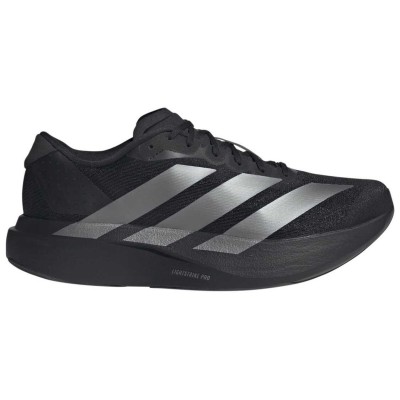 ADIDAS ADIDAS ADIZERO EVO SL WOVEN BLACK SILVER SHOES Buena amortiguación | 6 mm | 232 g | LIGHTSTRIKE PRO | Series y velocidad | Ver producto | |
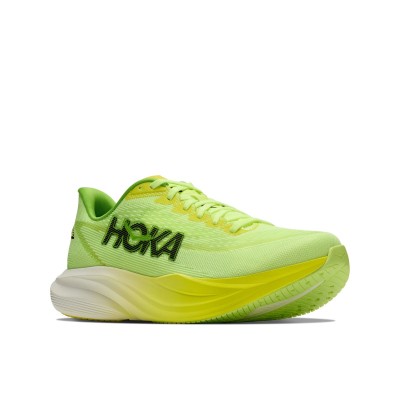 Hoka HOKA MACH 7 NEON ZAPATILLAS RUNNING HOMBRE | 5 mm | 237 g | ESPUMA EVA SUPERCRÍTICA | Series y velocidad | €159.99 | Ver producto |
← desliza para ver toda la tabla →
What nobody tells you
Common mistakes when choosing.
Five mistakes we see every week in the shop. Avoid them and you're halfway to the right decision.
01
Buying a race-day shoe without training in it first
A carbon-plated shoe changes your biomechanics. Wearing it for the first time on race day is a recipe for overload. Do at least 2–3 long training runs in it first.
02
Choosing for looks instead of fit
A shoe that pinches your forefoot at km 5 becomes hell by km 18. The width of the last matters more than the colour that made it your Instagram favourite.
03
Wearing them for the first time on race day
Nothing new on the big day. A shoe needs 30–50 km to settle in and for you to spot any rubbing or lacing adjustments. Break it in on a long run, not at the start line.
04
Ignoring your body weight
A soft foam under a 90 kg runner breaks down within 200 km. If you weigh over 80 kg, prioritise midsole density over pure responsiveness. It's not marketing, it's physics.
05
Not checking the wear pattern on your old pair
Your next shoe should be chosen based on the wear on your current one. Worn on the inside means you overpronate, on the outside means you supinate, centred means neutral. That evidence is free.
Frequently asked questions
What people ask us every week.
Real questions from the shop and chat. If you can't find yours, just ask us directly.
Do I need a different shoe from the one I train in?+
It depends on your goal. If you just want to finish the half marathon comfortably, your training shoe works perfectly fine. If you're chasing a PB or trying to break 1h30, a more responsive or plated shoe can save you 30 seconds to 2 minutes per 10K. The practical rule: train in one, race in another — but both need to be comfortable over 21K, not just 10.
What drop is best for a half marathon?+
For most everyday runners, 6 to 10 mm. Below that, more load goes on the calf and soleus; above it, more load goes on the knee. The key is not to change drastically — if you're used to 10 mm, don't jump to 4 mm overnight. Your body needs weeks to adapt to every millimetre.
Is a carbon-plated shoe worth it for a 1h50 half marathon?+
Honestly: only if you've trained in it. The plate drives the stride forward and improves running economy, but it also fatigues auxiliary muscles you're not used to using. At 1h50, the bottleneck is usually your training, not your shoes. A nylon plate (cheaper and more forgiving) offers better value for sub-5'30" paces.
How many kilometres does a half marathon shoe last?+
Between 600 and 800 km for a training-and-racing shoe. Pure race shoes with a carbon plate drop to 250–350 km. Signs it's time to change: the ground feels harder, unexplained knee or hip niggles appear, the sole looks polished on the inside. Track your mileage from day one.
Can I use the same shoes for speed sessions?+
Yes, especially if you pick a "tempo" or "light daily trainer" model like the Hoka Mach, Adidas Boston or Saucony Endorphin Speed. These are versatile — they handle long runs well and hold up fine at pace. What we don't recommend is doing speed work in a maximum-cushion shoe: they bottom out and you lose response.
What if I'm also doing some trail or mixed terrain?+
Don't mix them. A road shoe on trail wears out twice as fast and loses grip; a trail shoe on road vibrates and beats up your joints. If your half marathon is pure road, pick one from this selection. If you race on mixed terrain, check our road running shoes section, plus a dedicated trail running shoe.
Keep exploring
Other selections that might suit you.
If your goal changes or you're still deciding, these are good entry points.
Aristarun advice
Still torn between two models?
Tell us your level, target pace and weekly mileage. We'll get back to you with a specific recommendation within 24 hours.
Talk to a specialist →